

Tyres
This section lists all our tyres – summer, winter and all-season. Before comparing models, check your car's tyre size, load index and speed rating, then look at the EU tyre label for wet grip, noise and fuel efficiency. Read the guide
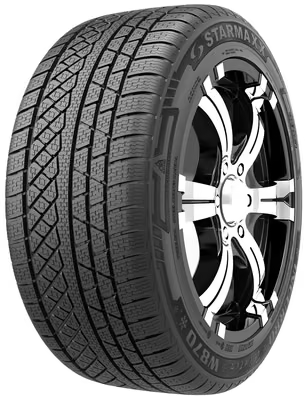


 M+S
M+S
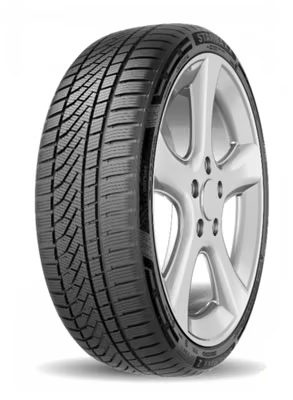 M+S
M+S
M+S
M+S
M+S
M+S
M+S
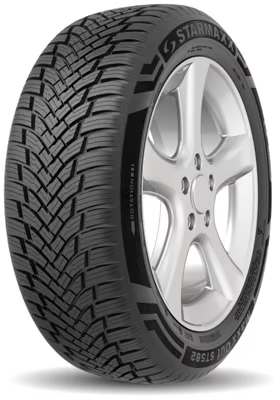 M+S
M+S
M+S
M+S
M+S
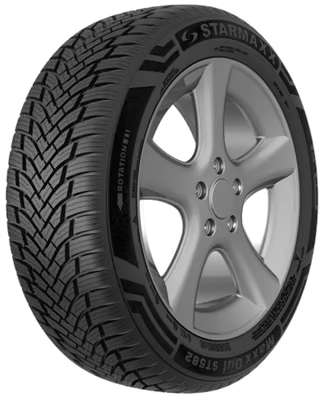
 M+S
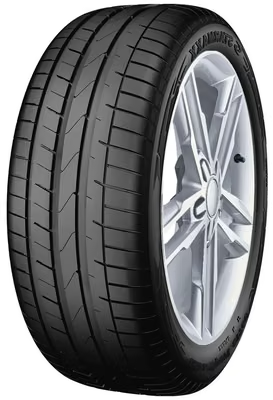

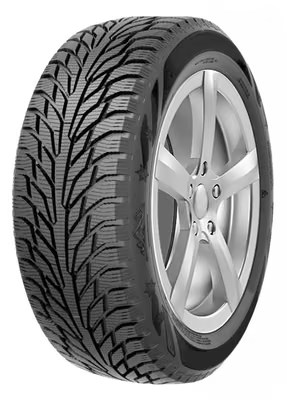 M+S
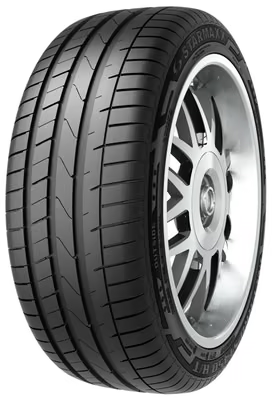 M+S
M+S
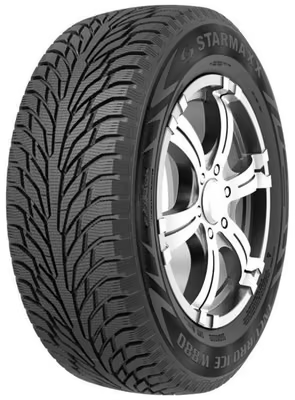 M+S
M+S
M+S
M+S
Summer, winter or all-season
Summer tyres use a compound that stays firm in warm weather, which gives shorter braking distances on dry and wet roads. Winter tyres are softer and densely siped, so they keep working on snow, on ice and in frost. In Latvia, cars and vans with a gross weight of up to 3.5 t must run on winter tyres marked with the 3PMSF symbol from 1 December to 1 March. All-season tyres are a compromise that suits mild winters and low annual mileage.
How to read a tyre size
A size on the sidewall looks like this: 205/55 R16 91V.
- 205 – tyre width in millimetres;
- 55 – aspect ratio: sidewall height as a percentage of the width;
- R – radial construction (what the letters R, B, D and ZR mean);
- 16 – rim diameter in inches;
- 91 – load index: 615 kg per tyre;
- V – speed rating: up to 240 km/h.
Latvia's roadworthiness rules require the tyre size to match the vehicle manufacturer's specification, and the load index and speed rating must be adequate for the vehicle. Reinforced tyres are marked XL – see what the XL, HL and C markings mean.
The EU tyre label
Most car tyres come with an EU label that shows three ratings:
- fuel efficiency (A–E) – rolling resistance, which affects fuel or electricity consumption;
- wet grip (A–E) – braking on wet asphalt: the closer to A, the shorter the stop;
- external rolling noise – in decibels and as class A–C.
Two pictograms may be added. The mountain with a snowflake (3PMSF) means the tyre has passed an official snow grip test, and the ice pictogram means it has been tested on ice. Tyres with the ice pictogram are designed for Nordic conditions and are usually weaker on wet asphalt. Studded tyres are not covered by the EU label.
How to find your size
The quickest way is to read the size on the sidewall of the tyres currently on your car. If you are not sure they are the original size, use the search by vehicle: choose the make, model, year and engine to see the sizes the manufacturer specifies. Many cars are approved for more than one size, and these are often listed on a sticker in the driver's door frame or inside the fuel filler flap.