

Summer Tyres
Summer tyres are built for the warm season: on dry and wet asphalt they have shorter braking distances and steer more precisely than winter tyres. In Latvia, cars and vans up to 3.5 t must be on winter tyres from 1 December to 1 March; the rest of the year summer tyres are allowed.
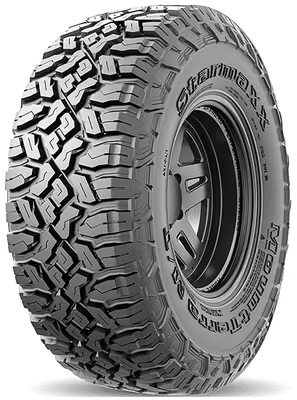


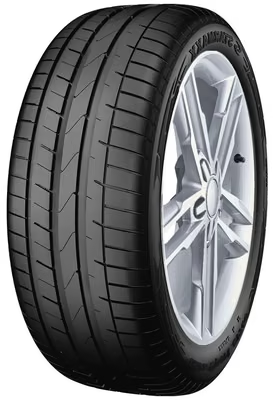
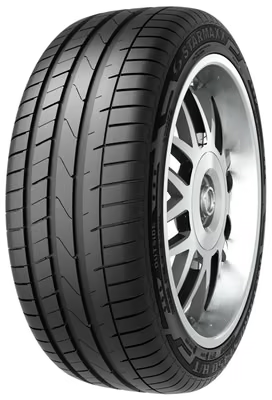
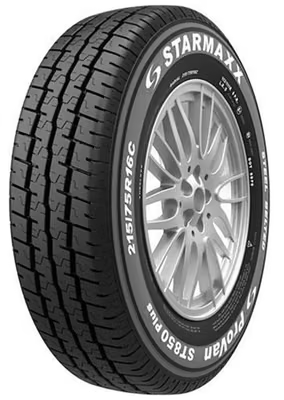
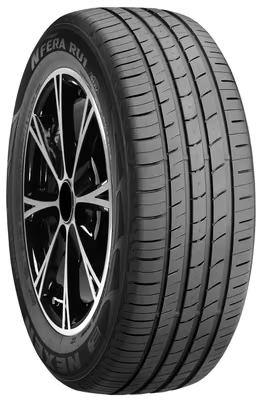

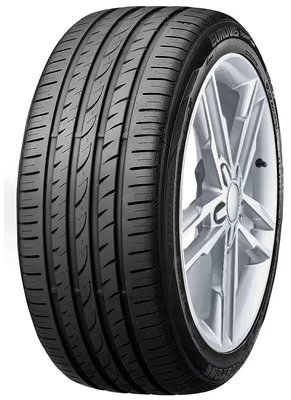
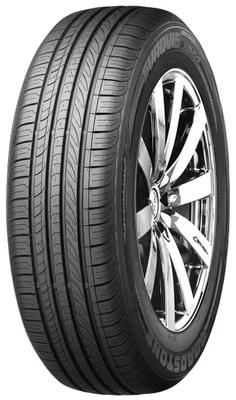
When to switch to summer tyres
After 1 March, when the winter tyre period set by the Road Traffic Regulations is over, summer tyres are allowed again, but frost and black ice are still common on March and April mornings. In practice, drivers switch once night temperatures stay above freezing and no more snow is forecast. Studded tyres must come off before 1 May: driving on them is prohibited from 1 May to 1 October. For a seasonal calendar, see when to change tyres in Latvia.
What to compare
- Wet grip – EU label class A–E. It reflects braking in the rain, which makes it the key rating for a summer tyre.
- Dry braking and handling – not on the label, so independent tests and the tyre's intended use (comfort, sport, SUV) help here.
- Noise – shown in decibels and as class A–C; a few decibels are noticeable on a long motorway drive.
- Fuel efficiency – lower rolling resistance cuts consumption and adds range to an electric car.
- Load index and speed rating – no lower than the car maker specifies. Heavier cars such as EVs and large SUVs often need XL tyres; see what XL, HL and C mean.
Tread depth: the rule and our advice
The rule: outside the mandatory winter period, the minimum tread depth for cars and vans up to 3.5 t is 1.6 mm (Cabinet Regulation No. 295 on roadworthiness inspections).
Our advice: as a summer tyre wears towards 3 mm, it clears water noticeably worse, the risk of aquaplaning rises and wet braking distances grow. Plan a new set in good time rather than waiting for the minimum allowed.
When all-season tyres make more sense
If you drive little, mostly in town, and can choose when to travel in winter, all-season tyres let you manage with a single set. In Latvia they are allowed in the winter period only with the 3PMSF symbol and at least 4 mm of tread. In summer, however, they brake longer and wear faster than dedicated summer tyres, so high-mileage drivers are better off with a separate summer set.